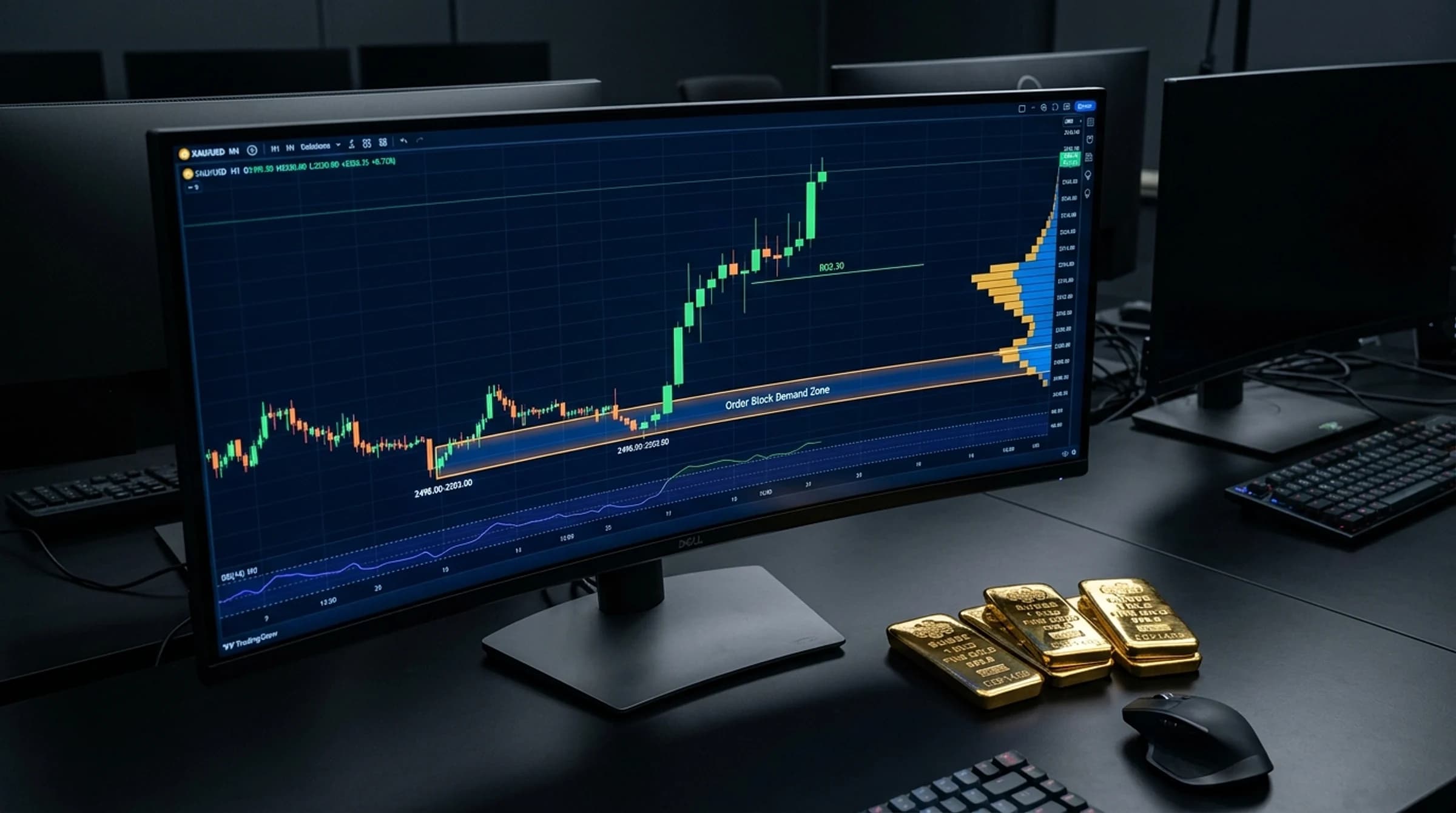
1. What Defines a True Institutional Order Block?
In retail trading literature, an "Order Block" is frequently simplified as "the last down candle before an up move." This superficial definition leads retail traders to mark dozens of random candlesticks across their charts, resulting in frequent stop-outs.
An authentic institutional Order Block on gold represents the footprint of commercial market makers absorbing large-scale counterparty volume before driving price through structural highs or lows.
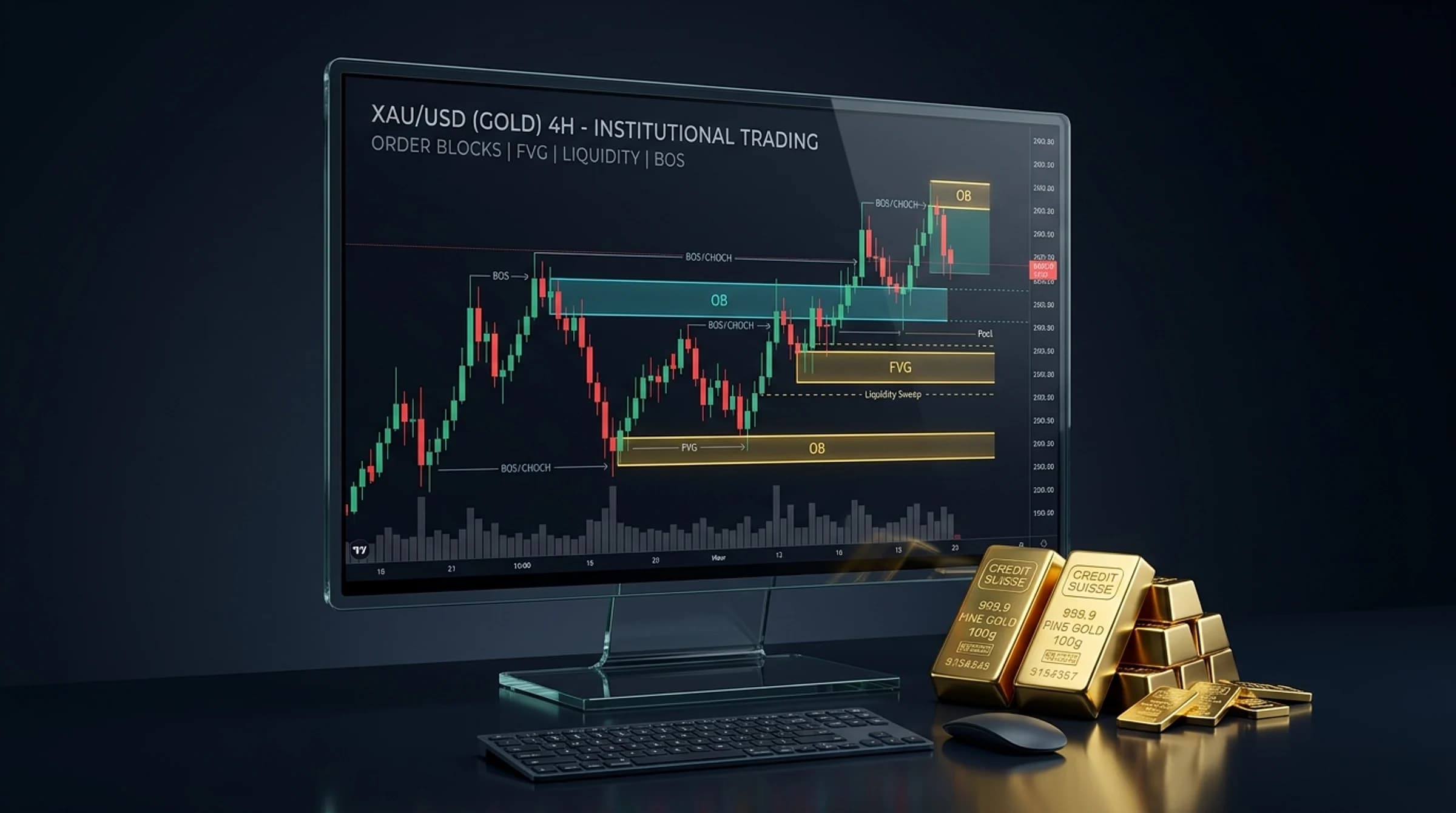
The Anatomy of a Valid Order Block: - Bullish Order Block (+OB): The lowest down-close candlestick (or compact cluster of down candles) immediately preceding a violent upward displacement wave that breaks market structure (MSS). In this candle, institutions accumulated large long positions by absorbing panic retail sell stops. - Bearish Order Block (−OB): The highest up-close candlestick immediately preceding an aggressive downward displacement wave that breaks market structure downward.
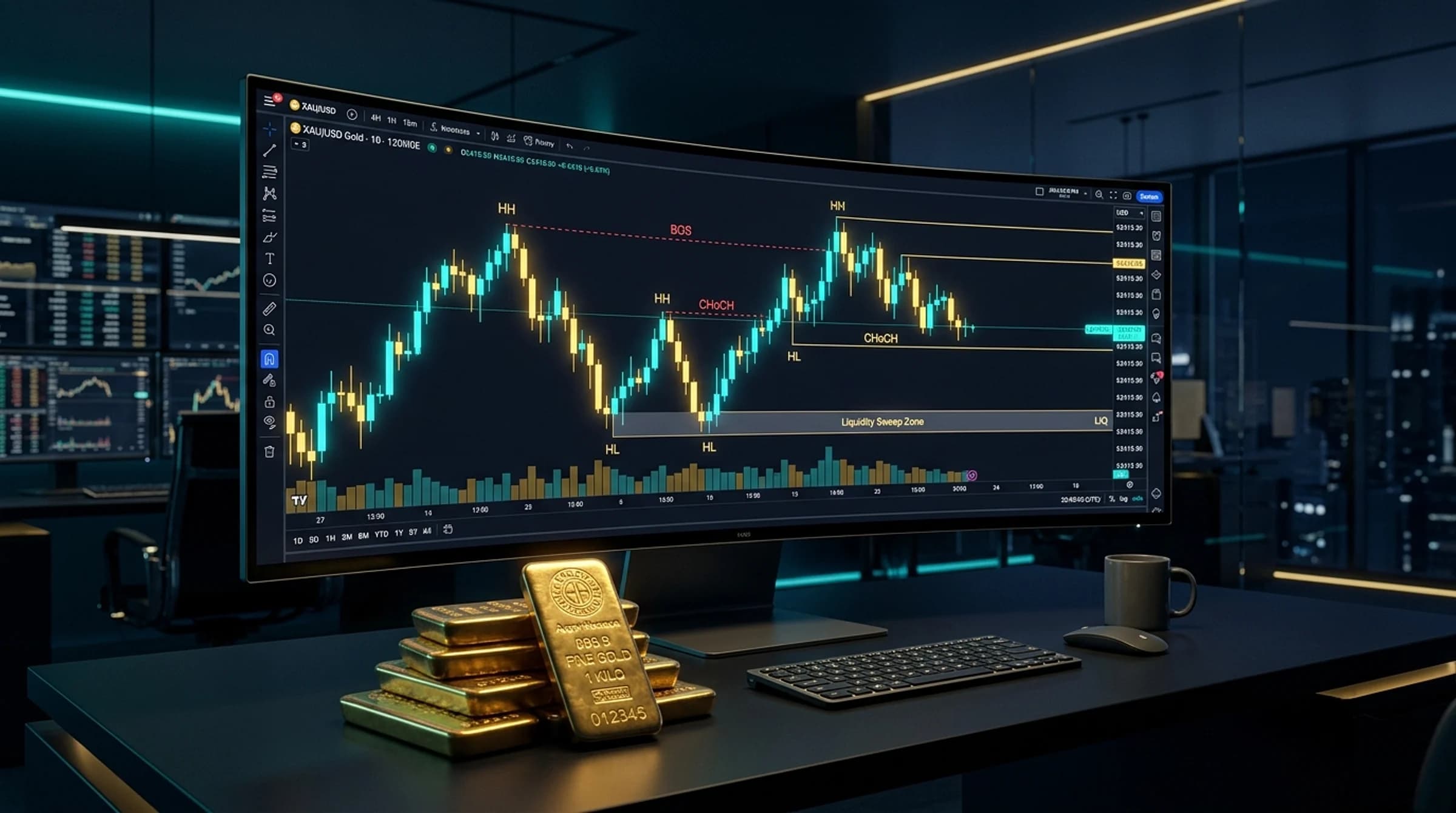
The Three Mandatory Validation Filters: 1. Liquidity Sweep: The OB must have swept prior Buy-Side or Sell-Side Liquidity (e.g., taking out the Asian range low or previous day high). 2. Displacement with FVG: The move leaving the OB must be energetic and leave an associated Fair Value Gap. If price drifts away sluggishly without an FVG, the candle is NOT a valid order block. 3. Market Structure Shift (MSS): The displacement must break a meaningful prior swing point with a full candle body close.
2. The Mean Threshold (50% Level) & Mitigation Rules
When price returns to retest a previously formed Order Block, how deep can the retracement penetrate before the setup is invalidated?
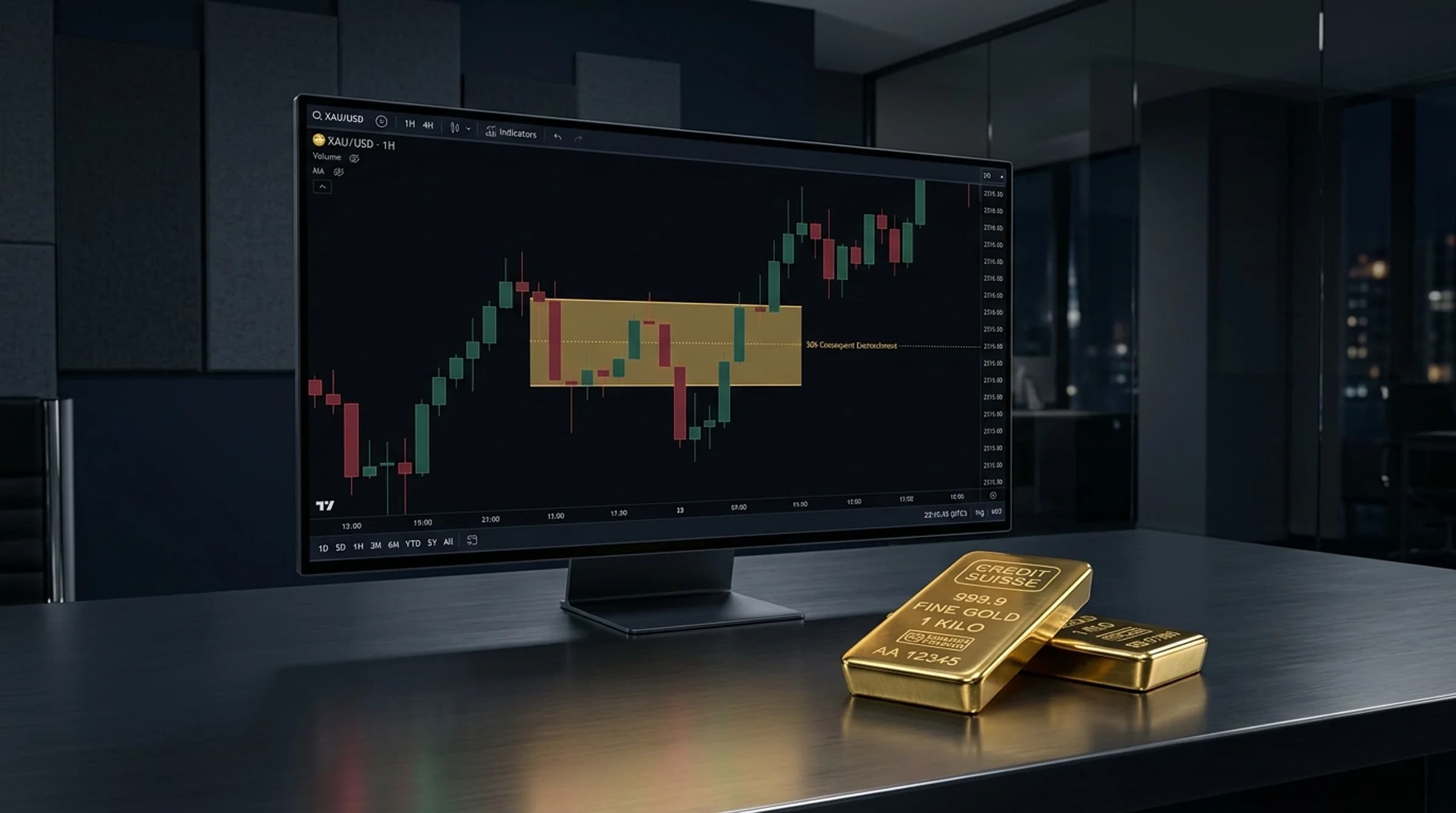
The Mean Threshold: The Mean Threshold is the exact 50% midpoint of the Order Block's candlestick body (excluding wicks): Mean Threshold = Open Price + [(Close Price − Open Price) × 0.50]
Institutional Defense Protocol: - Optimal Reaction: Price enters the upper boundary of the Bullish OB and wicks into the Mean Threshold, but the candlestick body closes firmly above the 50% level. This confirms that commercial limit orders are actively defending their average cost basis. - Setup Invalidation: If a candlestick body closes decisively below the Mean Threshold, the Order Block is considered violated. The institutional thesis is falsified, and traders should not attempt further long entries from that level.
Mean Threshold = Candle Open + [(Candle Close − Candle Open) × 0.50]3. Breaker Blocks: When Order Blocks Invert
A Breaker Block is one of the highest-probability patterns in ICT/SMC gold trading. It is an Order Block that has failed, flipping its role from support to resistance (or vice versa).
The Bullish Breaker Formation: 1. Gold forms a swing high (Point A). 2. Price sweeps downward to take out prior sell-side liquidity, creating a lower low (Point B). 3. From that low, price violently surges upward, taking out Point A and printing a higher high. 4. The highest up-close candle at Point A (the swing high that was broken) is the Bullish Breaker. 5. When price pulls back to retest Point A from above, that broken swing high acts as powerful institutional support.
Why Breakers Work on Gold: Traders who sold short at Point A were trapped when price exploded to a higher high. When price returns to Point A, trapped short traders close their positions at breakeven (which requires buying back the market), while institutional breakout algorithms add new long orders.
| Block Type | Structural Sequence | Entry Execution | Risk Boundary (SL) |
|---|---|---|---|
| Standard Bullish OB | Liquidity sweep low → MSS high | Retest of OB open or Mean Threshold | Just below OB wick low |
| Standard Bearish OB | Liquidity sweep high → MSS low | Retest of OB open or Mean Threshold | Just above OB wick high |
| Bullish Breaker Block | Swing high that formed before a sweep of lows and higher high | Retest of broken swing high from above | Below breaker candle low |
| Bearish Breaker Block | Swing low that formed before a sweep of highs and lower low | Retest of broken swing low from below | Above breaker candle high |
4. Multi-Timeframe Order Block Alignment
To trade Order Blocks profitably on gold, you must respect the multi-timeframe hierarchy:
- Daily & 4-Hour Order Blocks: Represent macro institutional accumulation/distribution. These blocks define the major weekly directional bias and primary liquidity targets. - 1-Hour & 15-Minute Order Blocks: Represent intraday session structure. These blocks establish the dealing range for the London and New York sessions. - 5-Minute & 1-Minute Order Blocks: Used exclusively for trade execution timing.
The Golden Rule of Alignment: Never take a 5-minute Bullish Order Block if price is currently tapping into a major Daily Bearish Order Block. Higher-timeframe institutional orderflow always supersedes lower-timeframe patterns.
5. Worked Practical Trade Example: Bearish OB Short Execution
Here is a complete execution sequence on a 15-minute XAUUSD chart:
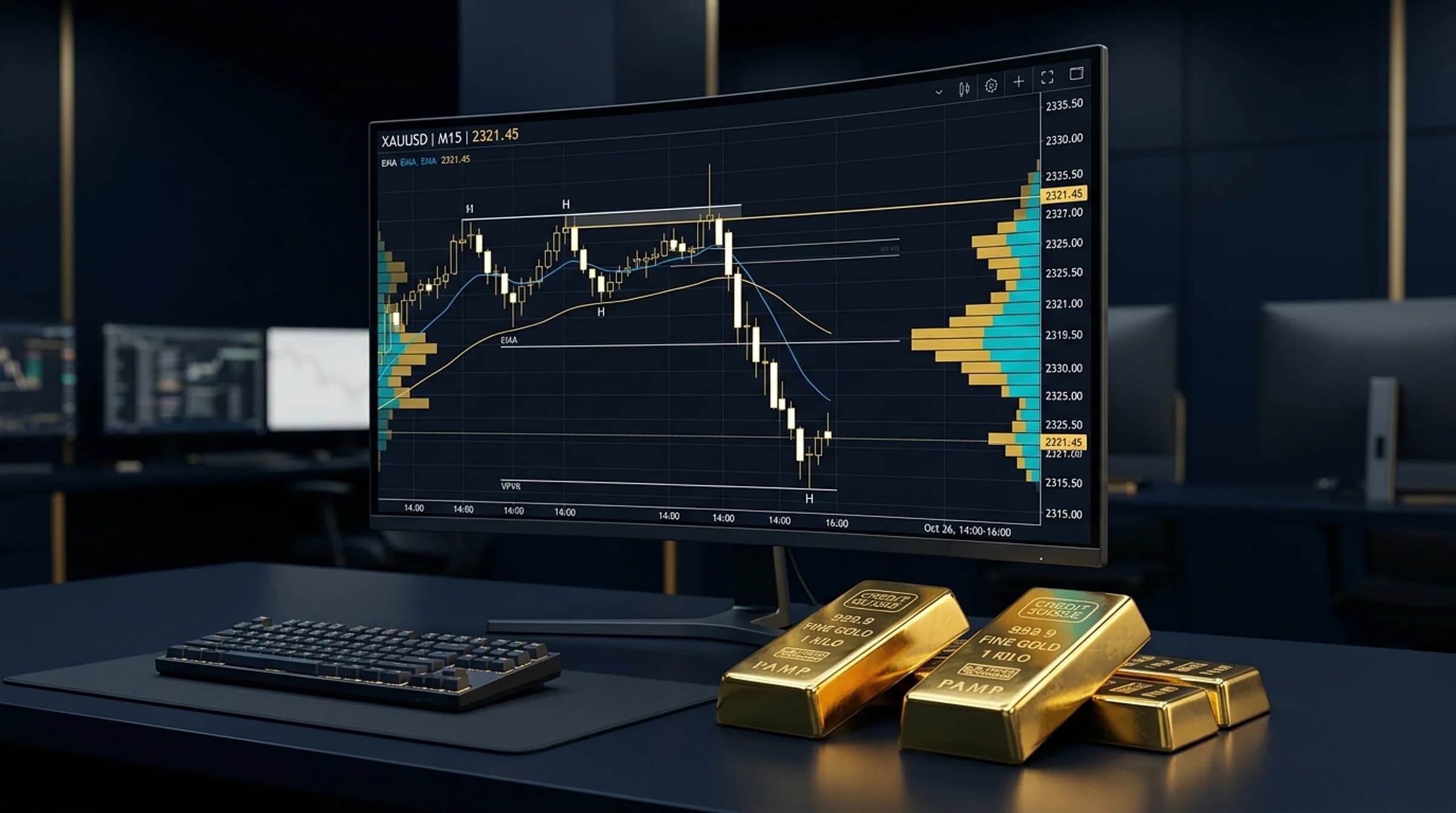
Market Context: - 4-Hour trend is bearish. The New York Open (13:30 UTC) sweeps Buy-Side Liquidity above the London high ($2,664.00), probing up to $2,667.50. - A violent 15-minute red displacement candle forms between 13:45 and 14:00 UTC, plunging $12.00 downward through internal swing support at $2,658.00. - Order Block Identified: The last green up-close candle before the drop (13:30–13:45 UTC candle: Open = $2,662.00, High = $2,667.50, Close = $2,665.00). - Mean Threshold = $2,662.00 + [($2,665.00 − $2,662.00) × 0.50] = $2,663.50.
Trade Execution: - Entry: Sell limit placed at the Order Block open ($2,662.00) with a second limit at Mean Threshold ($2,663.50). Average fill = $2,662.75. - Stop Loss: Placed safely at $2,668.50 (1.00 dollar above the sweep wick high of $2,667.50). Stop distance = $5.75. - Position Sizing: Account equity = $25,000 USD. 1% Risk = $250.00. Lots = $250.00 / ($5.75 × 100 oz) = 0.4347 lots → Floored strictly to 0.43 lots ($247.25 actual risk). - Target: Sell-Side Liquidity resting at the Asian session low ($2,642.00). Target distance = $20.75.
Outcome: At 14:15 UTC, price retraces into the OB, wicks to $2,664.00 (holding below the wick high), and rolls over aggressively. By 15:45 UTC, price reaches the $2,642.00 target, realizing $892.25 USD gross profit (1:3.61 R:R).
6. Why Order Blocks Fail During Macro News Releases
The primary reason retail traders experience large losses with Order Blocks is attempting to hold them through high-impact macroeconomic data releases (CPI, Non-Farm Payrolls, FOMC).
The Failure Dynamic: - When Tier-1 economic news is released, tier-1 liquidity providers withdraw resting limit orders from the electronic book to prevent adverse selection. - In the absence of resting liquidity, price enters a high-velocity repricing mode. - An Order Block that looks technically perfect on the 15-minute chart will be blown through in milliseconds because the macro news fundamentally alters the fair value price of gold.
The Rule: Never enter a trade at an Order Block within 15 minutes before a Tier-1 economic release. Wait for the initial 15-minute news whipsaw to clear, allow fresh institutional displacement to establish new market structure, and trade the subsequent mitigation block.